
When you think of the Middle Ages, and try to define the most characteristic element, the image of a château comes to mind.
In fact, the term " château fort " is the one that comes most quickly to mind, even if specialists tend to qualify it because of its overly restrictive meaning. For a château is not just a building used for warfare and defense. It's also a place to live, and this residential function has been much more important than the military one over time. But the château is also the symbol of a class, the aristocracy, which uses it to display its power and domination.
The château through the ages
château firstappeared in the 9th and 10th centuries. It became the identifying building of the nascent feudal society. This first period in the history of castles, from the 10th to the 12th century, was characterized by theemergence of two main types: the earth and woodchâteau (also known as Motte castrale or Motte féodale) and the stone château .
While the former is the most common, the latter, the prerogative of the powerful, is a contemporary of the former, contrary to the popular belief that wood was first used before solid construction.
-

Plan of a motte castrale
-

Motte Féodale - Saint-Sylvain-d'Anjou (Maine-et-Loire)
At the end of the 12th century, conflict with the Plantagenets, kings of England, led to changes in the art of warfare, with the employment of mercenaries using war machines. This led to changes in castral architecture, with the emergence of new concepts, notably the use of active defense. The widespread use of archères (or loopholes) is the most successful example.
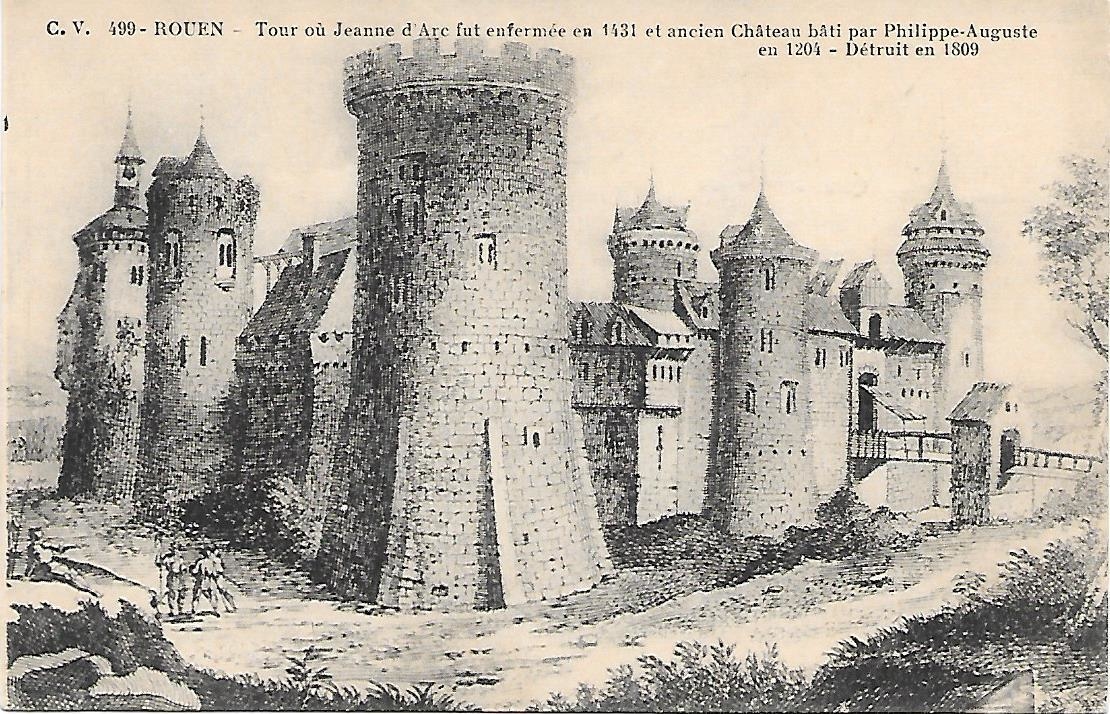
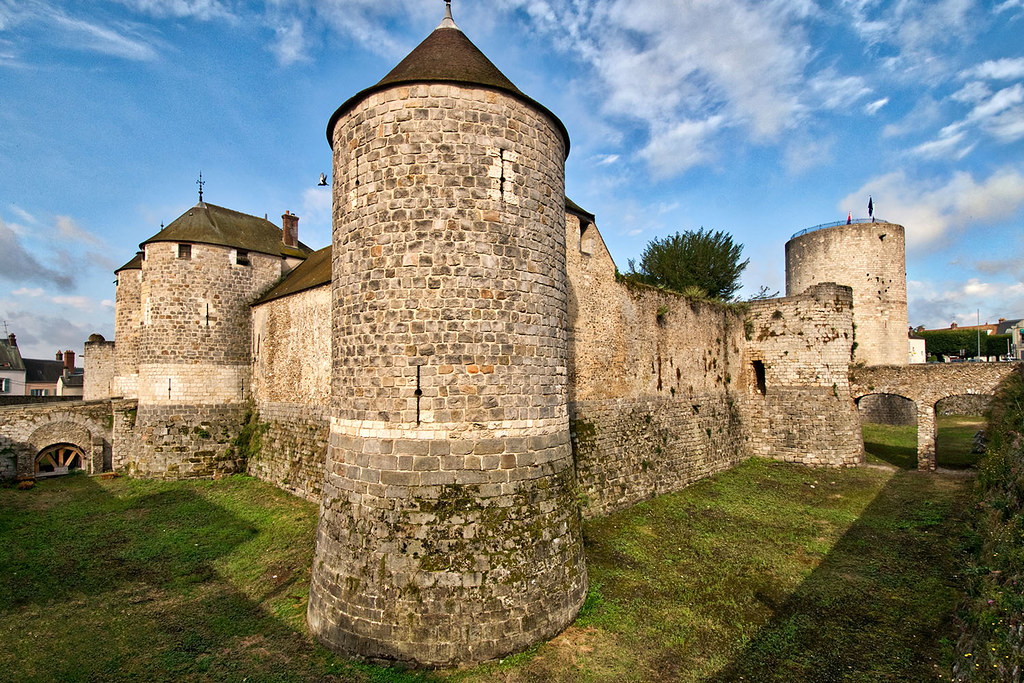
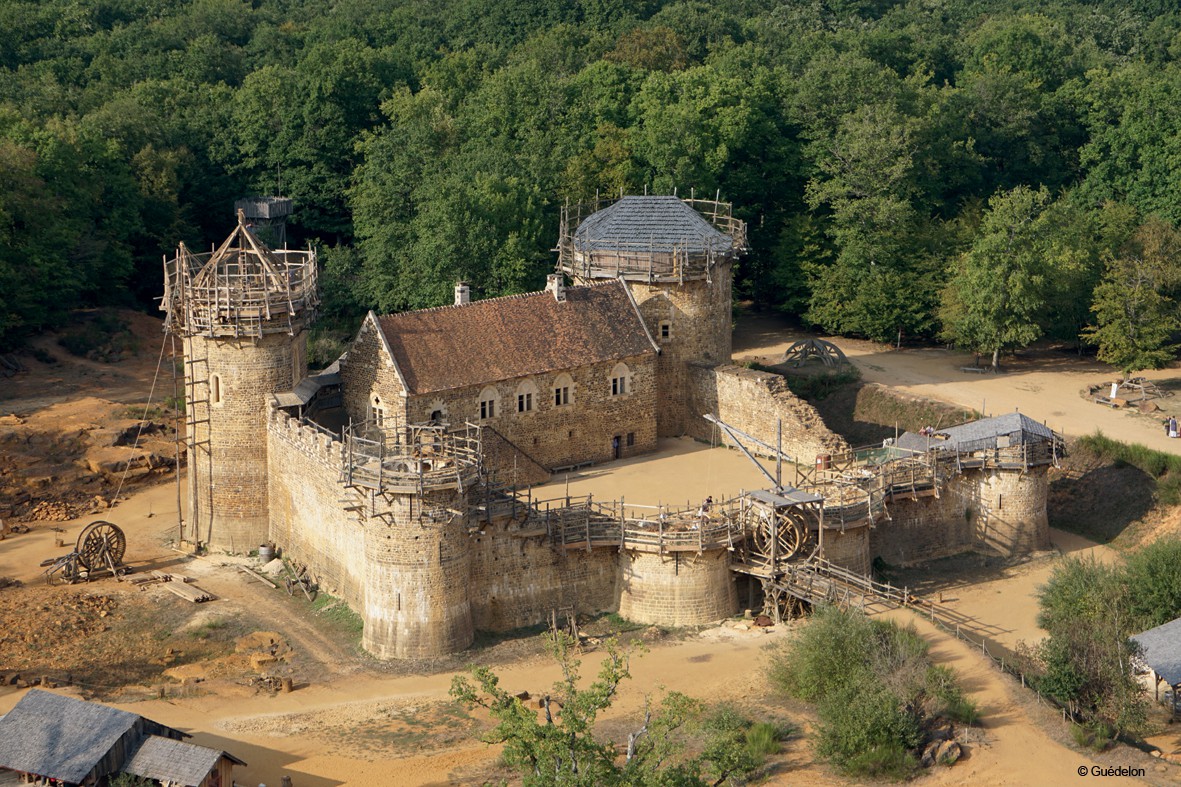
At the same time, the French king Philippe-Auguste implemented a military construction policy that asserted his authority. Surrounded by specialists, he instigated a new type of château that castellologists refer to as the "Philippian" orchâteau Philippe-Auguste" type. The Philippine type illustrates a desire to standardize military architecture: quadrangular plan flanked by towers, U-shaped moat with masonry counterscarp, blind curtain walls, circular towers with archères, two-tower châtelet with powerful defenses (knocker, portcullis, casements, side archères), dwelling on the reverse side of the curtain walls, circular keep. The keep is located at the corner and detached from the square.
-
Chateau de Rouen by Phillipe Auguste
-

Chateau de Dourdan
-
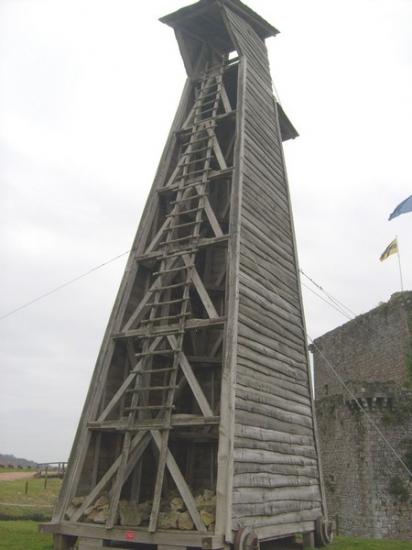
Château de Guedelon under construction
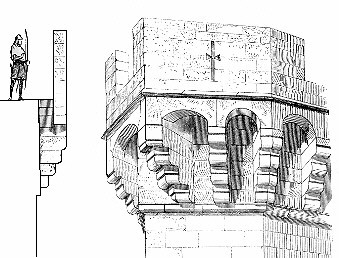
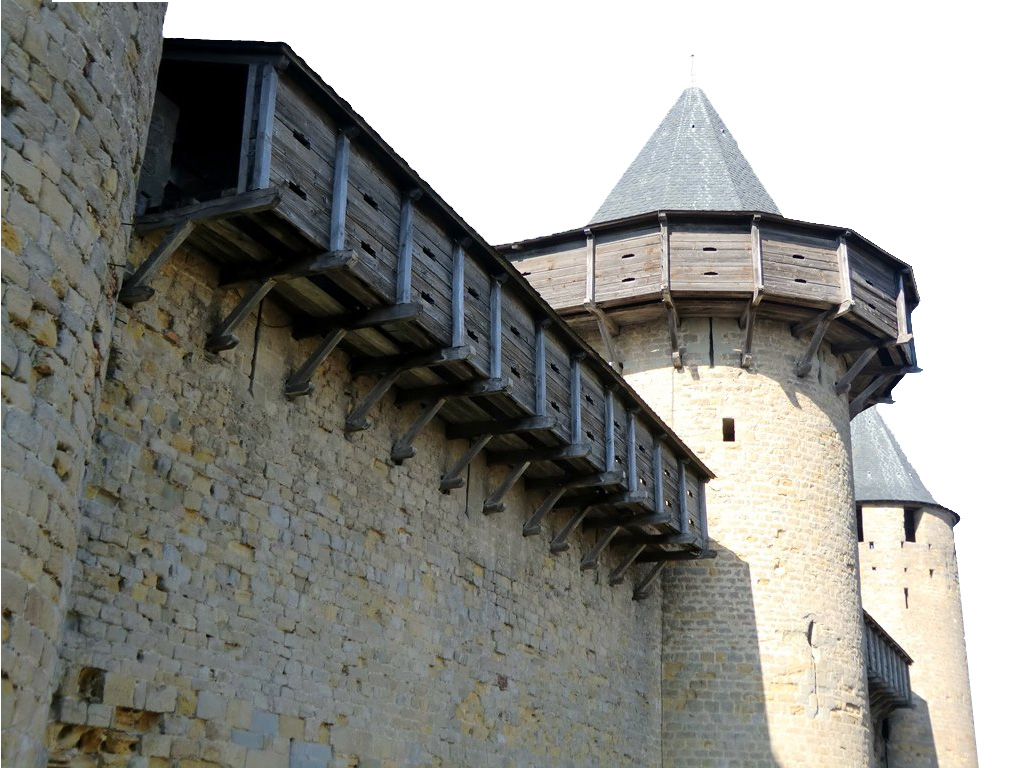
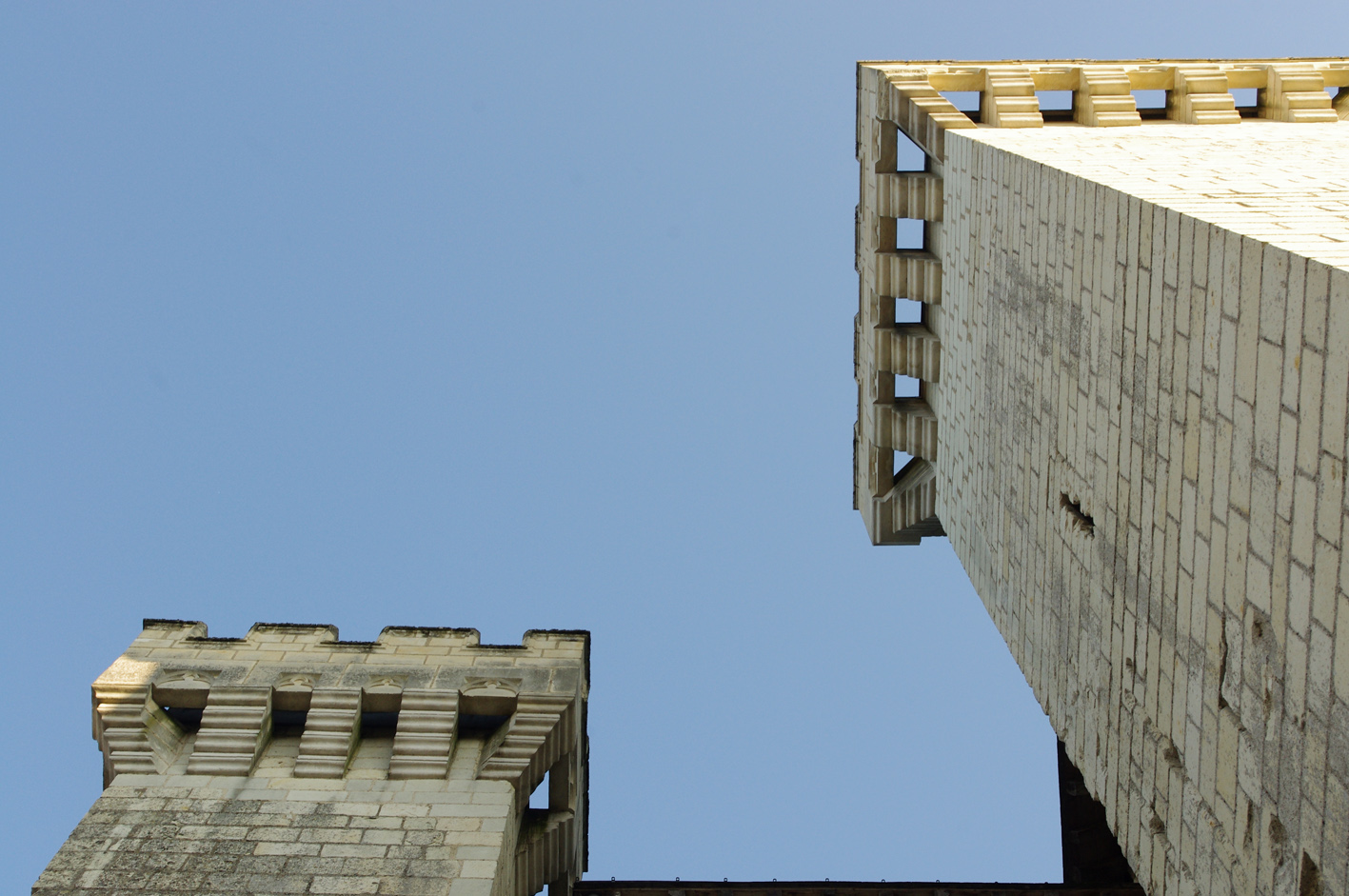
In the 14th century, the desire to live more comfortably led to a better balance between defense and residence. With the Hundred Years' War, fortification became a major concern. The defensive aspect was marked out externally by the systematic presence of machicolations, either on arches or on brackets (a new process that ensured perfect vertical flanking; older castles were updated with hoarding systems), and towers were now quadrangular to facilitate internal layout. Defense is essentially confined to the upper part and the base, where a series of archways are placed.
-

Map of machicolations
-

Hoarding for the installation of machicolations. The hourd is a solid scaffolding made of planks, corbelled at the top of a tower or wall.
-

Candes Saint-Martin machicolation of the Collegiate Church
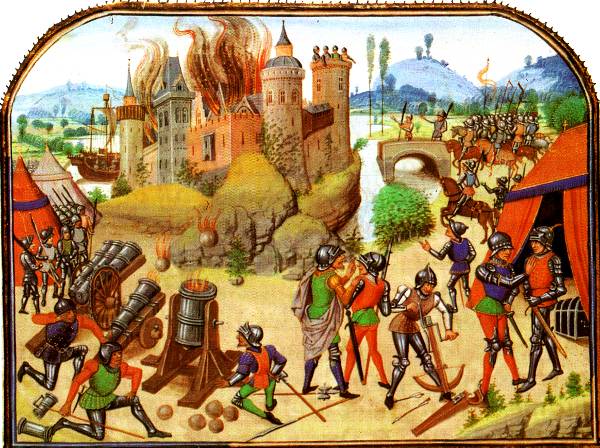
In the 15th century, the art of warfare underwent a revolution: the firearm. This revolution led to the slow demise of the fortified château . The first response to the firearm was to adapt, as illustrated by the cannonier, a new weapon that became widespread around 1400. It was in the mid-15th century, as the Hundred Years' War drew to a close due to the superiority of Charles VII's artillery, that the end of the medieval château began to loom. The power of the new weapon meant that architecture had to adapt. It was no longer possible to combine defense and residence, an association that had been the very essence of the château since the 10th century.
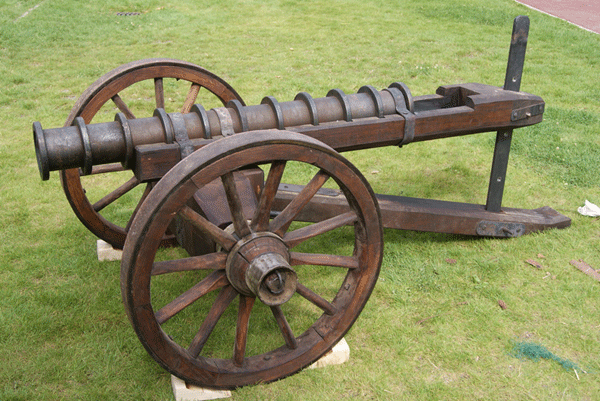
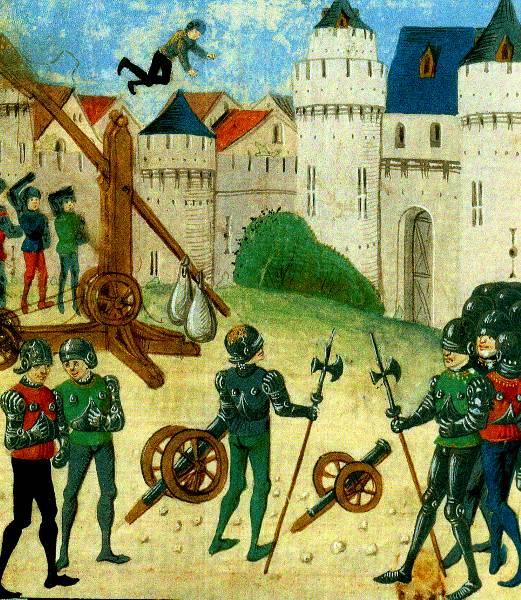
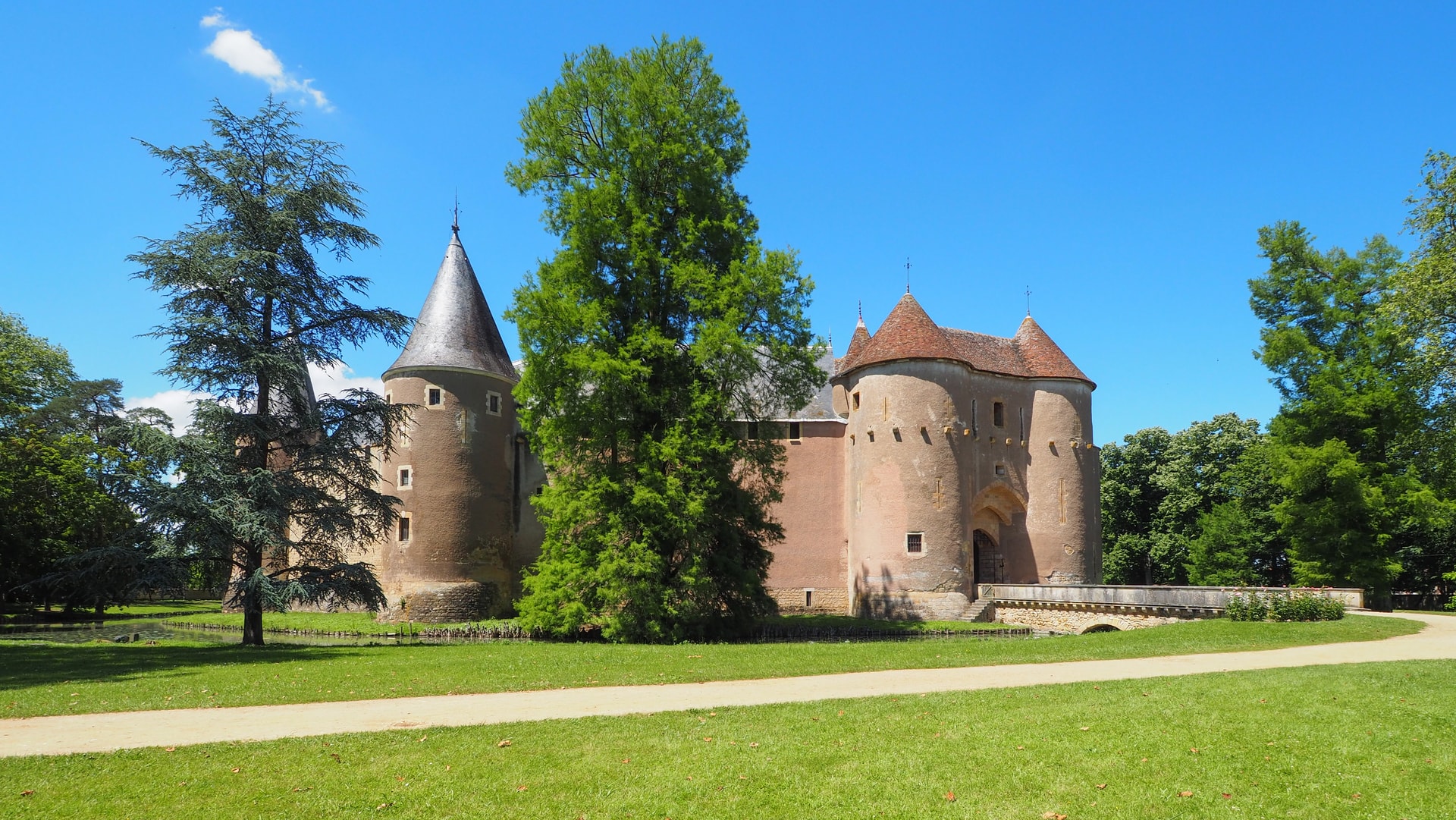
As artillery became increasingly powerful, central government began to question the usefulness of fortified castles. Many of them were redesigned to become residences. Sometimes, defensive elements were transformed into decorative features: drawbridges were replaced by stone bridges (as here, at Ainay), etc. The trend was to demilitarize castles, which were gradually abandoned in favor of comfortable, elegant residences. This new wind of change in architecture became known as the "Renaissance".
What about the château d'Ainay-le-Vieil?
château d'Ainay-le-Vieil has the appearance of a plain fortifiedchâteau . Built in the 13th century on the site of earlier fortifications, the château is located on the borders of Berry and Bourbonnais, halfway between Bourges and Montluçon.
Vassal to the Bourbons, it remained, like them, in the thrall of the kings of France, and probably owes it to this allegiance that it was so solidly built and never demolished or dismantled.
The fortified complex was very extensive in terms of surface area, in order to multiply the number of obstacles. It covered several hectares and featured "high walls, double ditches and two drawbridges". An outer wall about 250 paces from the château put it beyond the reach of the artillery of the time. This enclosure was itself defended by classical works: towers, a barbican, a châtelet... As it stood, the château had an essentially military vocation.
Ainay-le-Vieil belonged successively to the Bourbons, the des Barres, the Seuly (or Sully) family, who enlarged it in the 14th century, the Culants and Jacques Cœur before passing to the Bigny family in 1467, whose descendants are the current owners.
Find out more:
Jean Mesqui, "Les châteaux forts de la guerre à la paix", Paris, Gallimard, 1995.
Philippe Durand, "Le château fort", Paris, Editions Gisserot, 1999.
Dominique Allios, "Architecture des châteaux forts", Editions Ouest France, 2014
Jean Mesqui, "Châteaux et enceintes de la France médiévale, tome 1 et 2", Paris, Picard, 1991.